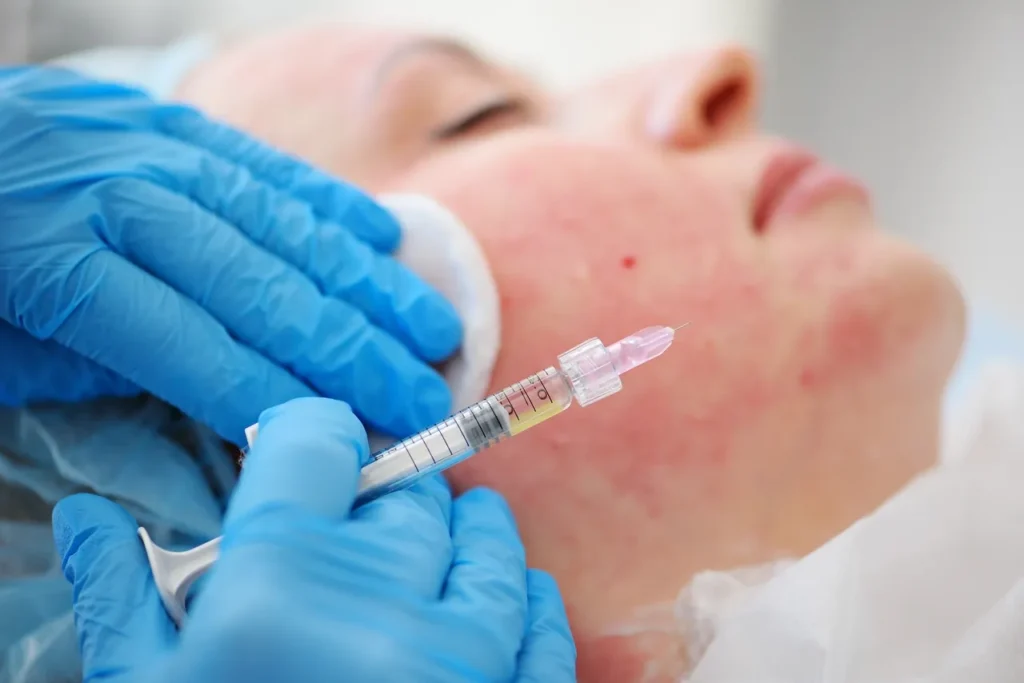

Dermal fillers are a popular nonsurgical option for enhancing facial volume, smoothing lines, and refining features such as the lips, cheeks, jawline, chin, and under-eye area. While treatment is typically quick and involves little downtime, the way you care for your skin afterward is important. Mild swelling, tenderness, firmness, and bruising are common after filler injections, especially in delicate or highly vascular areas. These effects are usually temporary and improve gradually over several days. Proper filler aftercare helps reduce these initial symptoms and improve the final results.
Swelling occurs because filler placement involves small injections beneath the skin, which can trigger a normal inflammatory response. Some fillers, especially hyaluronic acid fillers, also attract water, which may temporarily increase fullness before the area settles. This is why results immediately after treatment may look more pronounced than the final outcome. For many people, swelling is most noticeable during the first 24 to 48 hours and then steadily improves. Lip filler, in particular, can cause more visible swelling because the lips are sensitive and move frequently.
To help reduce swelling, it is usually best to keep the treated area cool and avoid unnecessary pressure. A clean, cold compress may be applied gently for short periods during the first day, as long as it is not pressed firmly against the skin. Sleeping with the head slightly elevated the first night may also help limit fluid buildup. Patients should avoid touching, rubbing, massaging, or manipulating the treated area unless their provider specifically instructs them to do so. Excess pressure can potentially shift filler or increase irritation in the early healing period.
For the first 24 to 48 hours, filler aftercare involves avoiding strenuous exercise, hot tubs, saunas, steam rooms, and excessive heat exposure, as heat and vigorous activity can increase blood flow, which may worsen swelling or bruising. Alcohol may also contribute to swelling and should generally be avoided shortly after treatment. Patients who are prone to bruising may be advised by their provider to avoid certain blood-thinning medications or supplements before treatment, but prescription medications should never be stopped without medical guidance.
Makeup should be used cautiously after filler treatment. Many providers recommend waiting until the injection sites have closed before applying cosmetics, often until the next day, to reduce the risk of irritation or contamination. Skin care should also be gentle. Harsh exfoliants, strong active ingredients, facial massage, and cosmetic devices should usually be avoided for a short period unless the injector gives different instructions. Sunscreen remains important, since sun exposure can worsen skin inflammation.
It is also important to be patient with results. Filler often takes one to two weeks to fully settle, depending on the product used, the treatment area, and the individual’s healing response. Small asymmetries, firmness, or uneven swelling may be noticeable early on but often improve as swelling resolves. A follow-up visit may be recommended to assess the final result and determine whether any adjustment is needed.
Although most swelling and bruising are normal, patients should know when to contact their provider. Severe pain, skin discoloration, increasing redness, warmth, fever, vision changes, or areas that appear pale, dusky, or mottled require urgent medical attention. These symptoms are uncommon but may indicate a complication that needs prompt care.
The best filler results come from a combination of skilled treatment, realistic expectations, and careful aftercare. By avoiding heat, pressure, strenuous activity, and irritation during the early healing period, patients can support a smoother recovery and allow their results to settle naturally. Following the specific instructions provided by the clinician is always the most important step, since aftercare may vary depending on the treatment area, filler type, and individual health history.